There’s a tendency for fans and bettors to give undue weight to past form when judging upcoming football showdowns, in part because it feels logical, and in part because there’s something reassuring about the certainty that comes with looking at the league table and a historic performance data set.
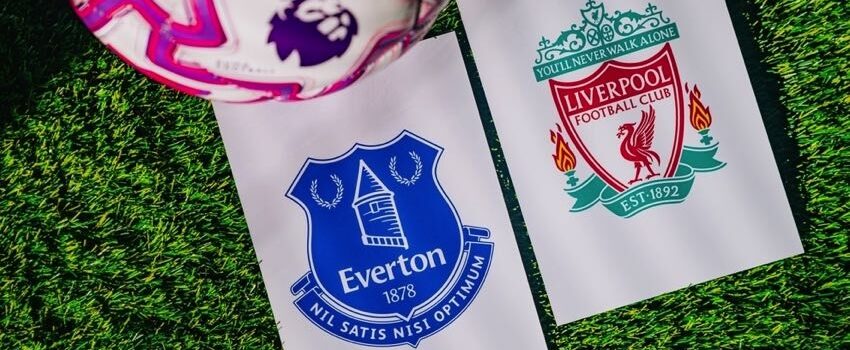
However, variance is a major factor in any match, and the potential for surprises is turned up to 11 when a team like Liverpool has a local derby on the schedule. Here’s why you really can’t trust recent form as an indicator of a likely outcome in this context.
Emotions Run High
coward_lion, Bigstockphoto
Football is a sport with an emotional core, although the modern game has been hammered into shape by a lot of science and business savvy over the past few decades, so we’re at a stage where this doesn’t play a significant role in typical matches. But when Liverpool are playing Everton, all that changes, and the amount of pressure piled on players means that their emotions are at fever pitch, and the reactions from the fans in the stands are that much more impactful.
In turn, with feelings bubbling over, there’s a greater potential for a team that’s on a bad run of form to play out of its skin, or for the favourite to fall short of expectations because the pressure proves too much. That’s why it’s always a good idea to check PowerPlay’s site to see the odds for any Liverpool derby, rather than just looking at how they’ve performed in their most recent run of games. Bookmakers put much more effort and skill into crunching the numbers, and won’t only be swayed by top-level data.
Discipline Breaks Down
Another facet of an emotion-driven Liverpool-Everton derby is that even if players aren’t making mistakes on the ball, they can be more susceptible to flights of unfocused aggression when they’re off the ball.
Famously, there have been 25 red cards in the history of the two teams taking one another on, which is more than any other equivalent derby in the Premier League. That alone gives you a sense of how quickly tempers can flair, and what the consequences might be when they do.
Tactics Change
ATGImages, Shutterstock
The way teams play differs depending on the matchup, and in a derby where there’s even more at stake, you’ll see this in an even more pronounced way. In the case of Liverpool-Everton, that’s usually expressed by the latter team playing much more defensively than would normally be the case, which is a move intended to minimise the effectiveness of the attacking plays and ideally result in opportunities for the underdogs derived from set pieces.
So, while it might be easy to look at how Liverpool have played in a given season, or at their impressive record in the local derby, and make assumptions about what’s going to happen in the next one, this shouldn’t be the only thing you consider. Variance on the day and the sheer emotionality of the event is enough to leave a degree of uncertainty in play.